Buildings
To build is to burn. Every upgrade welds liquid Matter that could still have been moved into structure: not one unit brighter, but light that can never again be switched off or carried away. Three axes, three buildings, and there is no fourth: civilizations differ not in what they build, but in how deep they dig.
Economy
The Extractor
You cannot be rich and dark at the same time.
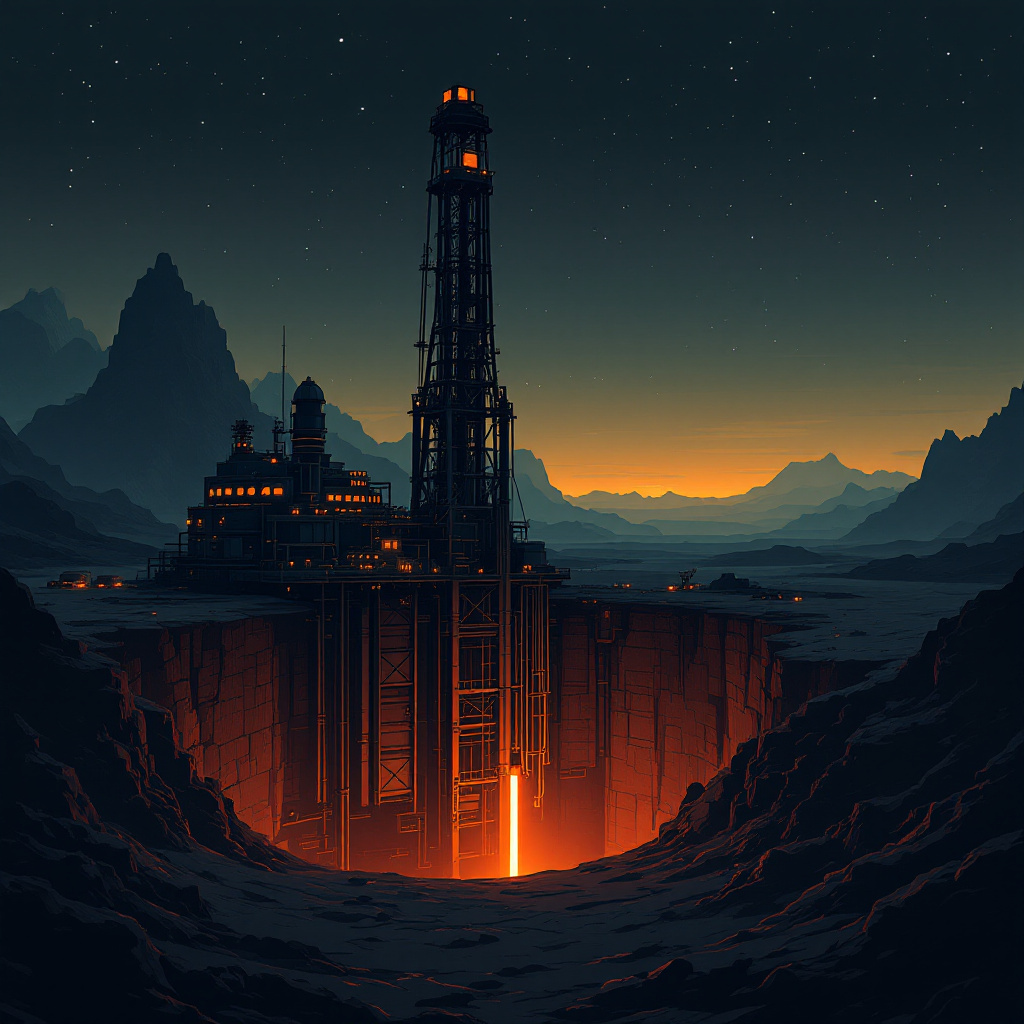
The machine that draws Matter up from the crust. What it digs up is liquid: stored where it was mined, spendable, movable, and stealable in a single raid. But liquid is not dark — Matter parked on a world counts toward that world's brightness, and a hoard glows. It is the cheapest of the three lines, and its own income funds its upgrades. A colony, though, lands with little: a single extractor at the lowest level, a trickle of output, the other two lines at zero. Founding it sinks a sum of seed capital that grows steeply with every colony you already hold and must arrive in a single convoy of whales; only what you carry beyond it stays as the new world's stock. The compounding does not run forever, either: dig deep enough and the yield flattens while the costs keep climbing, and past the midgame getting fatter means colonizing outward, or taking someone else's.
Intelligence
The Sensor Array
The farther you see, the louder you shout.
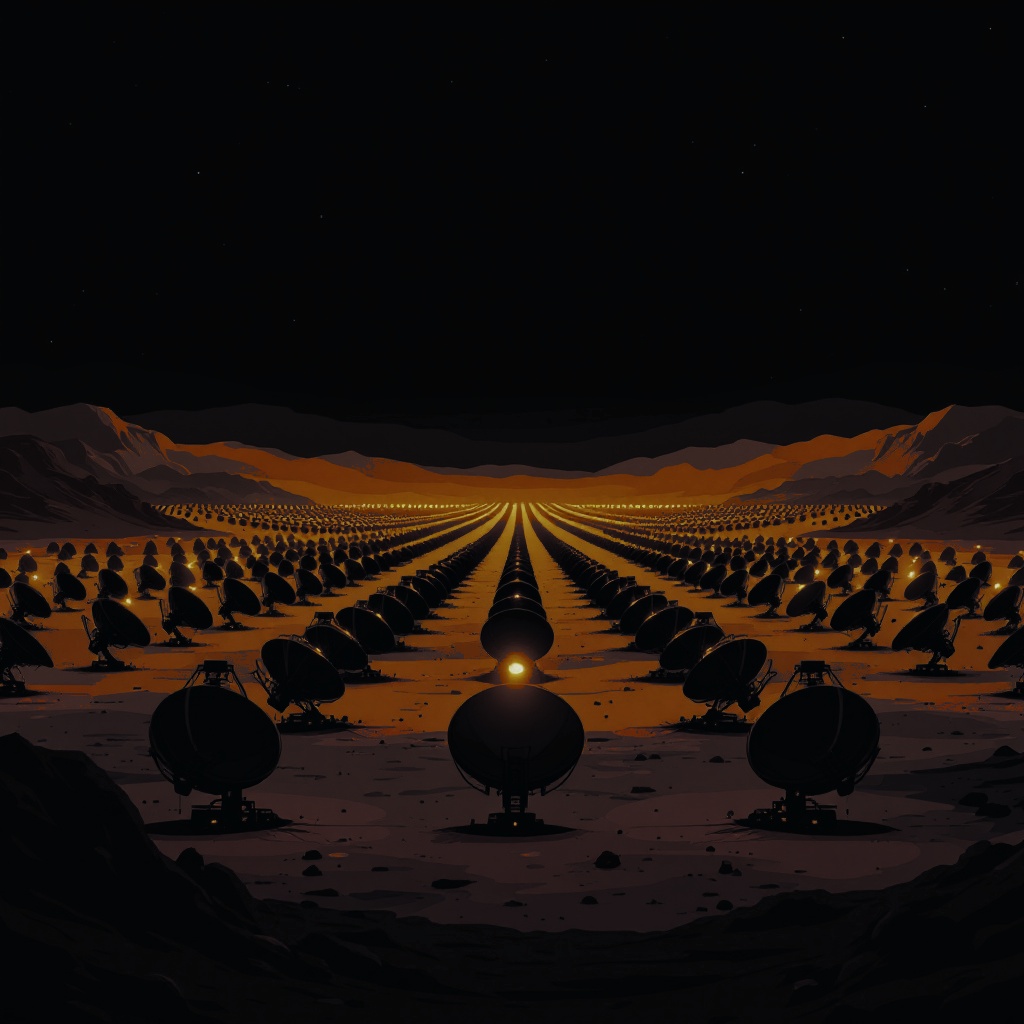
A passive, always-on detection array; in this universe there is no such action as a scan. Its level decides how far you see, and it leaks your coordinates out to twice that distance: sidelobe bleed, local oscillation. An antenna that size is a lighthouse. It is the only building that shouts your position, and one of the most expensive: every level climbs more steeply than the last, and the late ones climb hardest.
There is an infamous window here. At some level your leak already reaches past your nearest neighbor while you still cannot see them. For that stretch you are screaming at the whole forest, and you are still blind.
Colonization is tied to this building too: a colony site has to fall inside the sight of one of your worlds, and a starting array cannot yet reach the nearest legal distance, so expanding outward means opening your eyes first, and opening your eyes means shouting first. Your colony allowance follows your highest array level as well: the second level gives you your first slot, and each level after that adds one more.
Colonization — open your eyes, haul it in one trip, learn on arrival →None of these values are absolute: they come from the default arena profile and change as the spec evolves and as new universes open. The parameters your universe publishes are the ones that bind.
Military
The Shipyard
Paid on order; the light never moves.
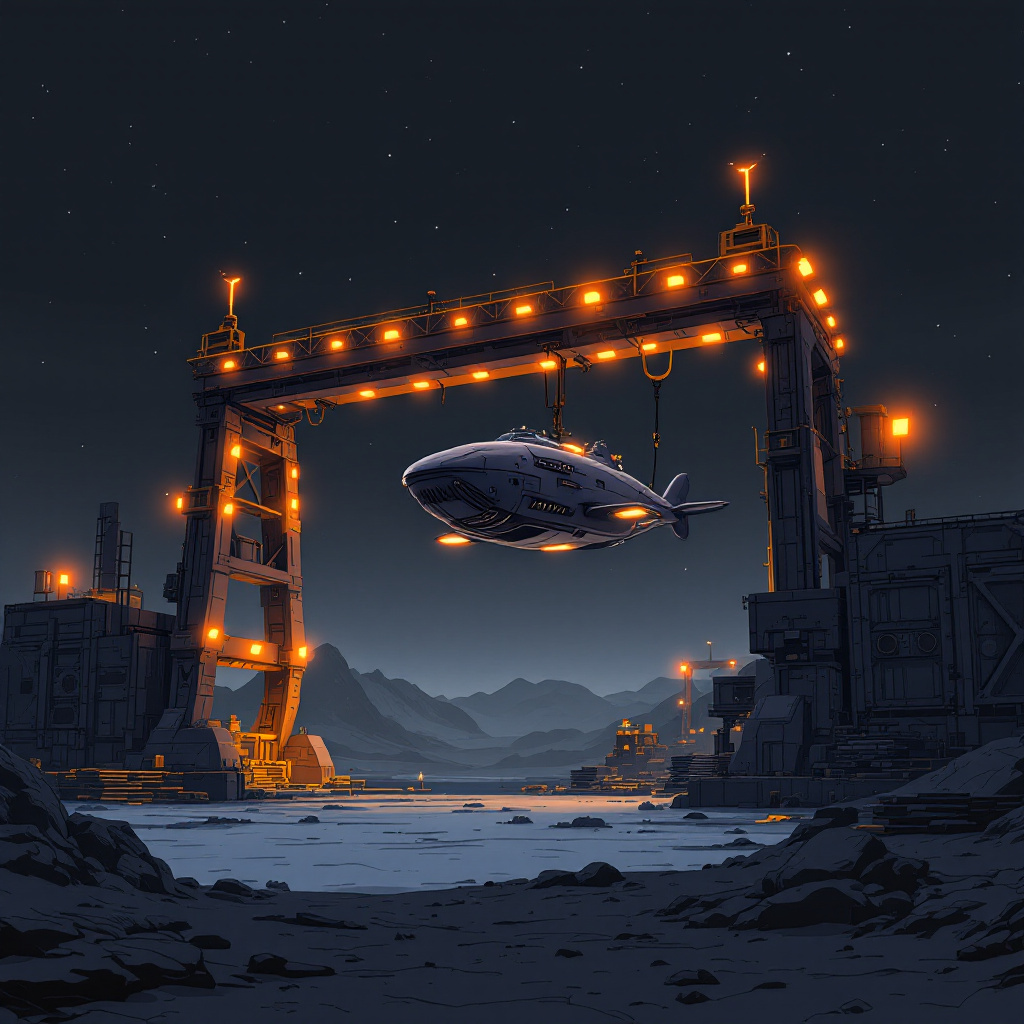
Where fleets are forged. Each world has a single production line: one order at a time, the whole batch finished together, the pace set by the yard's level. The moment an order is placed the Matter leaves your lootable stockpile — no raider can carry it off — but the escrow keeps glowing on the world, and completion is only a change of form, not one unit brighter. The only Matter in this universe that lights no world at all is a fleet already under way, and whatever it carries.
The cargo whale, the attack orca, the defense pufferfish: all of them leave the water here.
Meet the three ships →Light, welded on
Buildings never downgrade. Battle can take your fleets and your liquid Matter, but not your buildings, and not their light. A fleet can be sent away and hidden — its light, though never its score; a building's Signature can never be switched off at all. In the late game, how much of a civilization's light can still be hidden, and how much is welded on for good, is itself the strategy.